Group behind cannabis repeal effort in Massachusetts accused of using misleading tactics

A decade ago, voters in Massachusetts approved the legalization of recreational marijuana sales and cultivation, spurring a $1.65 billion industry. Now, a measure on the ballot this November could repeal that legalization. But, as WAMC reports, the tactics of the group behind the ballot initiative have been called into question.
Wendy Wakeman frames the issue as David vs. Goliath.
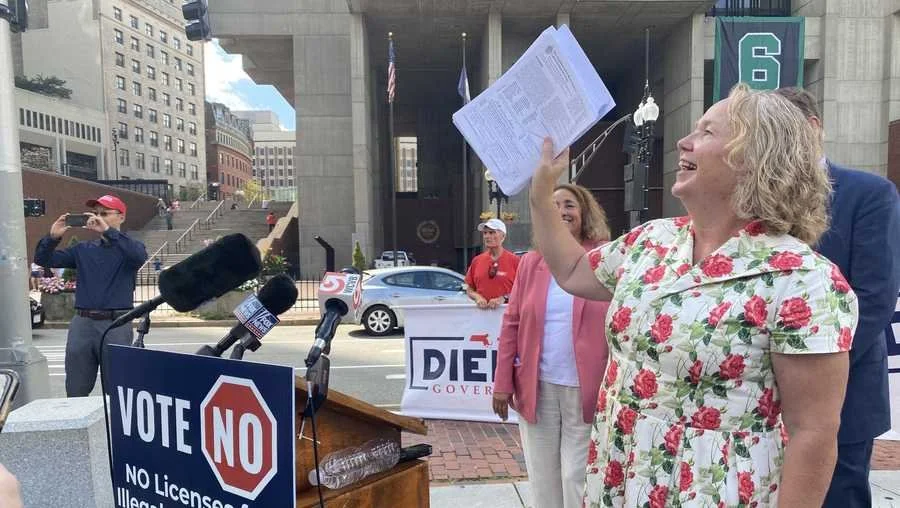
Wendy Wakeman spokesperson for the Coalition for a Healthy Massachusetts
"We have Big Marijuana making billions of dollars, and then we've got parents and we've got healthcare workers and we've got teachers all concerned about the safety of this untested product, this under-tested product," she told WAMC. "We really don't know what marijuana's impact is. So, I think that there is a concern that we're a little outgunned by the professional marijuana industry, which just makes a lot of money off of the product.”
Wakeman is the spokesperson for the Coalition for a Healthy Massachusetts, the group behind the ballot question in the commonwealth. In her telling, the coalition is David — the little guy going up against the titan of the cannabis industry in a fight for the well-being of the people of Massachusetts.
But Massachusetts Office of Campaign and Political Finance filings show the coalition has received the entirety of its $1.5 million in fundraising from one source: Smart Approaches to Marijuana, a Virginia-based nonprofit founded in 2013 by former Democratic Congressman Patrick Kennedy of Rhode Island, former White House Office of National Drug Control Policy advisor Kevin Sabet, and conservative political pundit David Frum, a former speechwriter for President George W. Bush.
The Coalition for a Healthy Massachusetts’ tactics for securing the signatures required to get the repeal question on the ballot are facing scrutiny for misrepresenting its intent. An objection filed with Secretary of State William Galvin’s office this month alleges coalition staffers hired to collect those signatures told potential signatories that the petition “would get fentanyl off the streets, provide affordable housing in their communities, or fund public parks.”
Wakeman dismisses those claims. “We absolutely, 100% trained our people to ethically gather the signatures," she said. "There was no intent to defraud the public.”
Democratic State Rep. Tricia Farley-Bouvier, who represents Pittsfield in the State House, says the controversy around how the signatures were collected and the misinformation spread during the effort raise questions about both the ballot initiative itself and the need to reform the process entirely.