OP-ED | VIRGINIA HEMP FARMERS STUCK BETWEEN MARIJUANA AND BIG GOVERNMENT
If you work in the “Hemp World,” you learn to wear a lot of hats. And fast
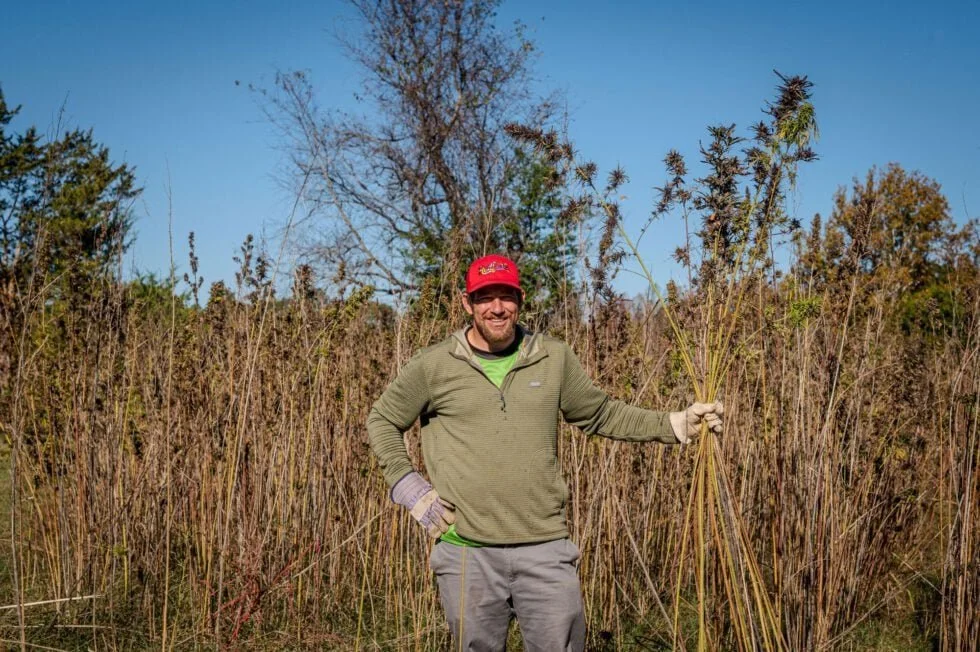
Joe Domino from Redfern Hemp Co.
My name is Joe Domino, and I work with Redfern Hemp Co., founded by Graham Redfern with the assistance of many of his long-term employees. In the span of any given day, I might be doing marketing, attending advocacy meetings, making wholesale deliveries, handling customer complaints, or ending up on Graham’s farm doing a myriad of different grunt jobs.
Over the past several years, I’ve experienced most facets of the business.
As a first-hand account, I can attest that Graham puts a lot of weight on his shoulders every day, not only to meet payroll but also to stay compliant with a laundry list of regulations.
Here are only a few of the things he has to do. In order to grow hemp on his 42-acre Caroline County farm, he must get an FBI background check every year, which he has done for the last six years. After that, he has to let the state’s hemp regulatory agency, under the Virginia Department of Agriculture and Consumer Services, know every time he plants a field and what variety.
If the crop is successful, Graham then has to pay for a cannabinoid profile test of the plant’s floral material for each field, with each test costing $100 or more, to ensure the biomass of the harvest is under the federal USDA limit of 0.3 percent total THC. If the tests are good, then Graham must, by law, harvest that crop within 15 days and, in turn, inform the state once he has.
There needs to be one clarification, or scientific explanation, about the new federal hemp ban that McConnell snuck into the bill that reopened the government. McConnell did not change the federal limit of 0.3 percent THC content from the farmer’s harvest.
What the ban did was sever the 0.3 percent THC threshold from being carried over to hemp products being sold at retail. McConnell’s spending bill amendment replaced the 0.3 percent standard with a strict cap of 0.04 mg of THC per packaged product.
That means Richmond’s Bingo Beer’s 2 mg seltzer would be considered marijuana.
The general consensus within the industry is that, for most THC consumers, a 5 mg drink is equivalent to a beer. From firsthand accounts, these infused beverages act almost like a nicotine patch, meaning these low-THC beverages have helped a lot of people get off booze.
On the federal level, the recent industry push is to postpone McConnell’s hemp ban at least two years, which would, hopefully, give the FDA time to create clearer guardrails for operators.
But if Graham misses his mark, meaning the product doesn’t meet Virginia’s strict standards of 2 mg or a 25:1 CBD-to-THC ratio, then that whole batch of product ends up in the trash. There are a lot of inherent risks, but for operators like Redfern that truly commit to these high standards, it’s a competitive advantage. It’s a way for compliant brands to separate good actors from bad actors. And it’s these bad actors, such as unregulated imported hemp vapes, which many critics erroneously point toward as representing the industry as a whole.