Pa. hemp industry reeling after feds close THC ‘loophole’
Pennsylvania’s hemp industry is reeling after a provision quietly tucked into the recent legislation to end the record-setting government shutdown effectively outlawed many hemp-derived products now being sold in stores across the state and country.
The provision, which closes what supporters describe as a “loophole” in a 2018 farm bill that legalized many intoxicating THC products, makes any hemp-derived products containing more than 0.4 milligrams of total THC per container illegal effective Nov. 13, 2026.
The move was welcomed by those who argue the loophole inadvertently launched an industry that began marketing intoxicating substances, such as Delta-8 THC, in brightly colored, cartoonish packages designed to appeal to teens.
But industry insiders warn the effective ban could affect a wide range of products, including CBD oils, and could mark the death knell for a multi-billion-dollar industry.
“Likely, if they get this provision to stick, all the family businesses — not just retail stores but distributors, gas stations, farmers — they’re all going to be either shutting down or looking to grow something else,” said Hunter Smetana, co-owner of 3BUDS LLC in Wyoming Borough. “This is a multi-billion industry that could totally go under because of this.”
Emerging industry
The meteoric rise of Delta-8 and its ilk began with the 2018 farm bill, which removed hemp and derivatives of cannabis with low concentrations of Delta-9 THC from the definition of marijuana in the Controlled Substances Act.
That prompted the cannabis industry to begin selling products containing less than 0.3% Delta-9 THC but with total THC concentrations above 0.3%, according to a congressional report released in August.
While marijuana remained illegal under federal law, the bill created uncertainty about which cannabis products were legally considered hemp, according to the report. As a result, a booming industry emerged and began openly selling hemp flower, vapes and edibles that provide users with intoxicating effects similar to — and oftentimes more potent than — actual marijuana.
“For too long, bad actors have used the loophole in the 2018 Farm Bill to profit from super-potent, hemp-derived THC products by placing them in gas stations, convenience stores, and online marketplaces,” Sunday said at the time. “This unregulated market allows children to buy these extremely potent products, oftentimes without any knowledge that the products are intoxicating, addictive, and not safe.”
According to the U.S. Hemp Roundtable, a nationwide hemp business advocacy group, the recent legislation will ban more than 95% of all hemp extract products. Although products containing less than 0.4 milligrams of total THC per container will still be allowed, the group says such “niche items are very rare.”
Joining the fight’
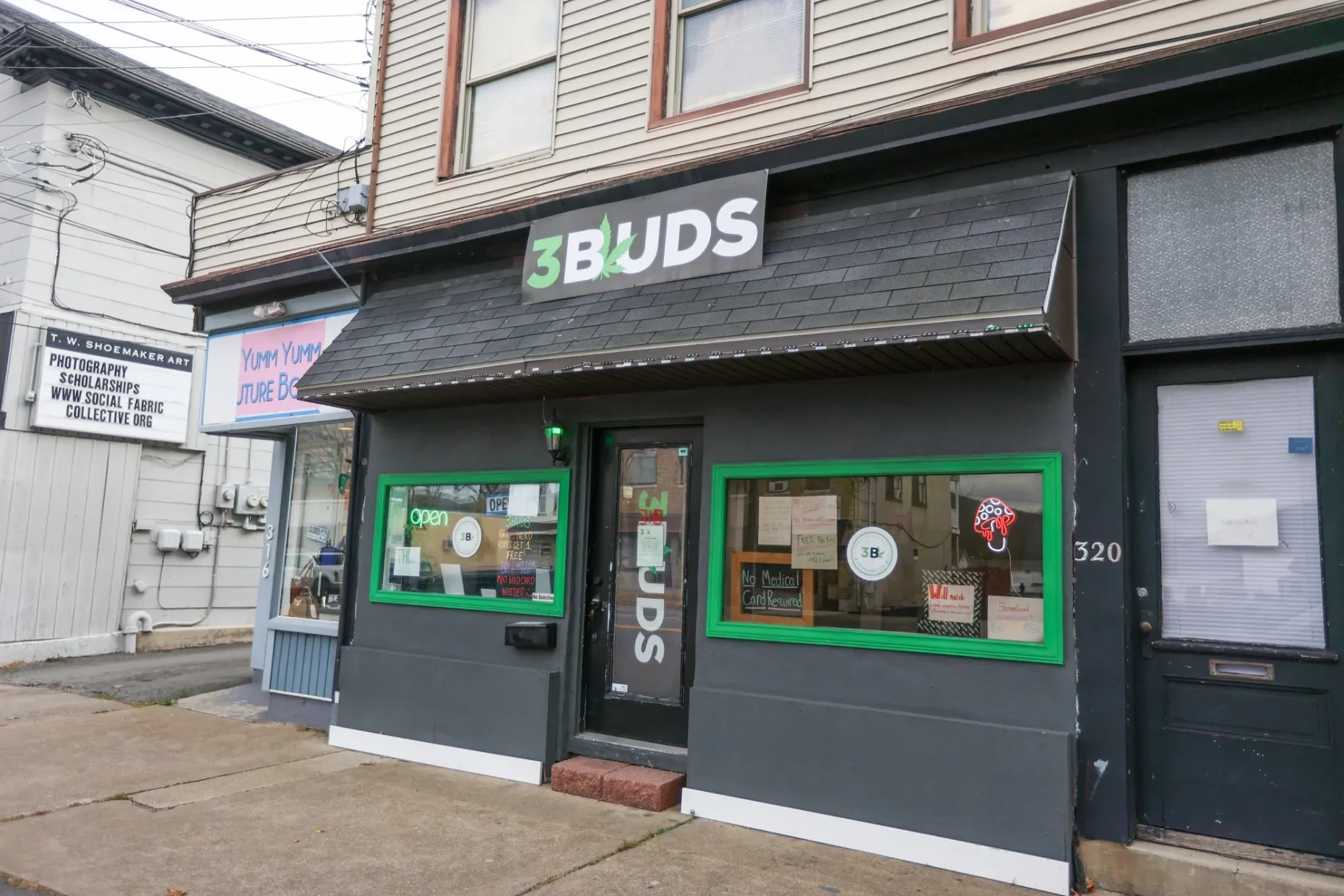
At the 3BUDS dispensary at 318 Wyoming Ave. in Wyoming Borough, the hemp-derived products are laboratory tested and are not sold in the cartoonish packaging associated with gas station cannabis products.
“Pretty much all of our packaging is standard,” Smetana said, adding that the company also employs childproof protections. “That’s just our own kind of self-policing that we’ve done in the industry. … A lot of the companies that pride themselves in it and believe that there should be stricter regulation just hold themselves to the standards of the marijuana industry.”
While he acknowledged that there is “definitely some sketchy product out there,” he said he does not think the solution should be an outright ban.