THCA and THC: What's the difference?
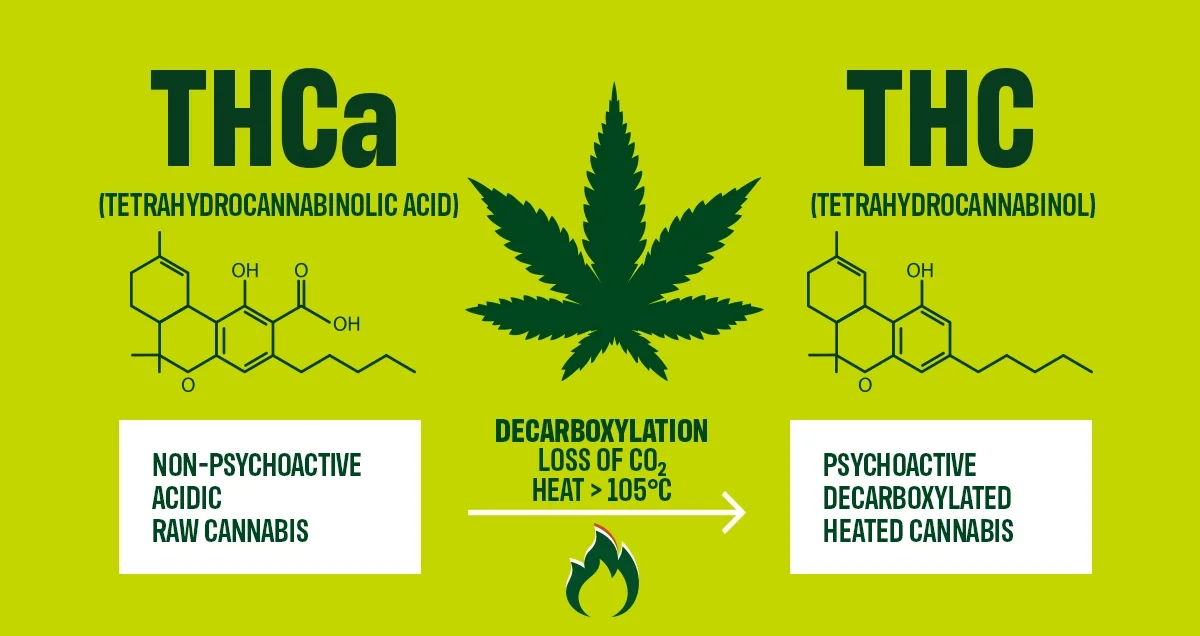
If you've ever wondered why eating raw cannabis doesn't produce a high, the answer lies in chemistry. The cannabis plant naturally produces THCA (tetrahydrocannabinolic acid) — a compound with potential health benefits but no psychoactive properties. It takes heat, light, or time to remove THCA's carboxyl group, transforming it into THC (delta-9 tetrahydrocannabinol) — the psychoactive compound responsible for cannabis's classic euphoric effect. This process is called decarboxylation, and it's what turns potential into potency.
What is THCA?
THCA is the acidic, non-intoxicating form of THC found in fresh cannabis. It's part of the plant's natural chemical composition before any heat is applied. The difference between THCA and THC lies in that extra carboxyl group, which keeps THCA from binding to the brain's cannabinoid receptors.
In the cannabis plant, THCA plays a protective role, helping defend against pests and environmental stress. For humans, its potential therapeutic benefits include pain relief, neuroprotective effects, and anti-inflammatory actions, although research is still in its early stages.
How THCA differs from THC?
While THC delivers psychoactive properties and intoxicating effects, THCA does not. It exists in raw flower and freshly harvested cannabis plant material. Once heated — through smoking, vaping, or baking — THCA loses that molecular weight and becomes THC. The conversion is what enables cannabis products to produce mind-altering effects.
When you apply heat or allow time to pass, THCA's carboxyl group detaches — a chemical transformation known as decarboxylation. This process changes the molecule's chemical structure, allowing it to interact with the body's endocannabinoid system and produce psychoactive effects.
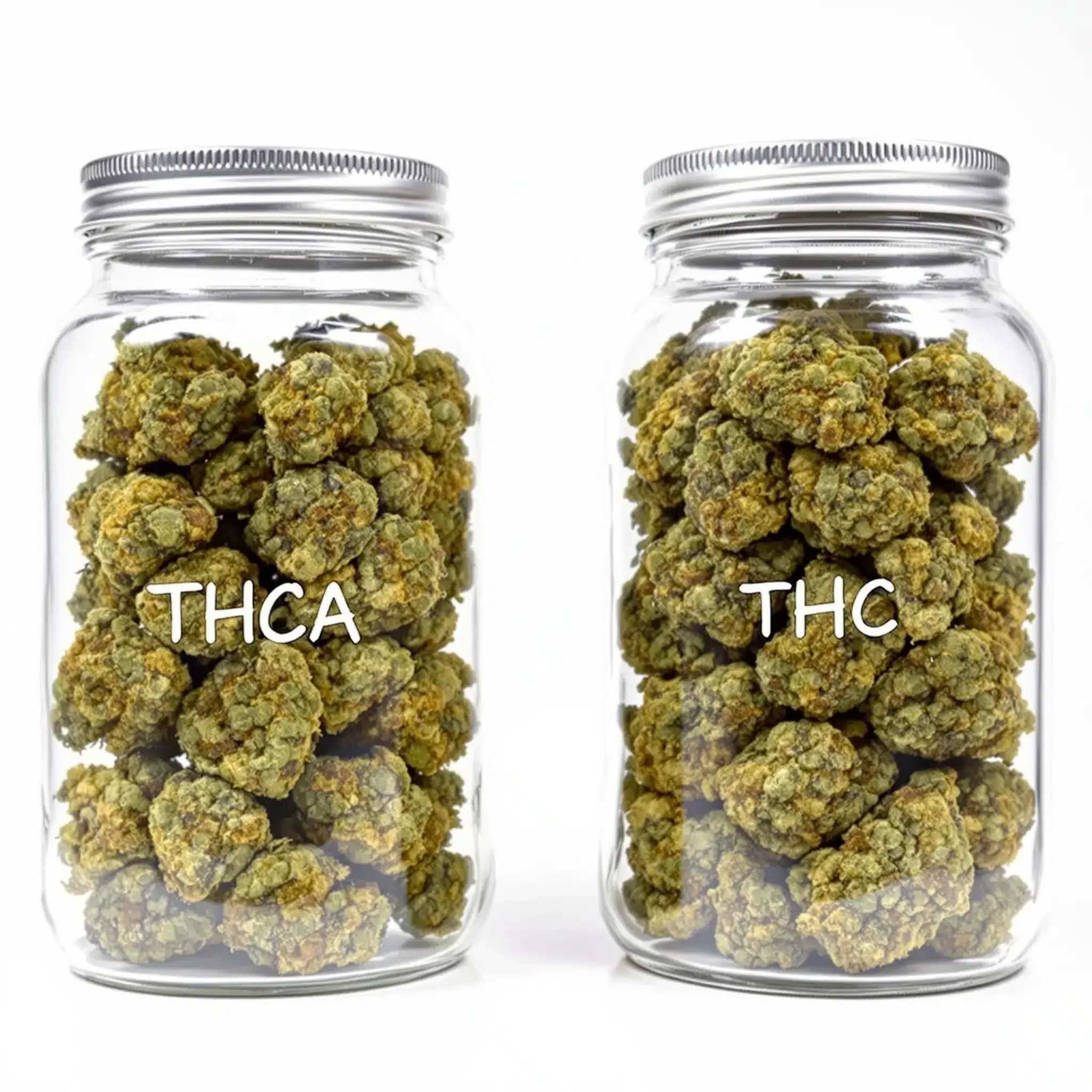
Why does THC get us elevated, and THCA doesn't?
The answer comes down to biology and molecular fit. THCA can't attach to CB1 receptors, which are the key docking sites in the brain responsible for producing a cannabis high. These receptors are concentrated in areas that control mood, perception, and coordination.
Because of its carboxyl group, THCA is too large to bind to CB1 receptors effectively. Without that connection, there's no psychoactivity — just subtle, non-intoxicating effects.
The role of CB1 receptors?
CB1 receptors are located throughout the brain and central nervous system. When THC interacts with them, it triggers the psychoactive properties that lead to euphoria, relaxation, and altered perception. THCA, on the other hand, bypasses these sites entirely.
How THCA becomes THC?
Inside your pipe, oven, or vaporizer, science happens fast. When THCA is heated, it undergoes decarboxylation, shedding its carboxyl group and converting into delta-9 THC.
Decarboxylation is essential for activating THC's psychoactive compound potential. Your body doesn't decarb THCA efficiently on its own. That's why eating raw cannabis doesn't cause a high — it passes through your digestive system mostly unchanged.
Without heat, THCA remains dormant, unable to cause the intoxicating effects or therapeutic benefits associated with THC.